
How to Import Uniforms from India to Germany: A Complete Business Guide
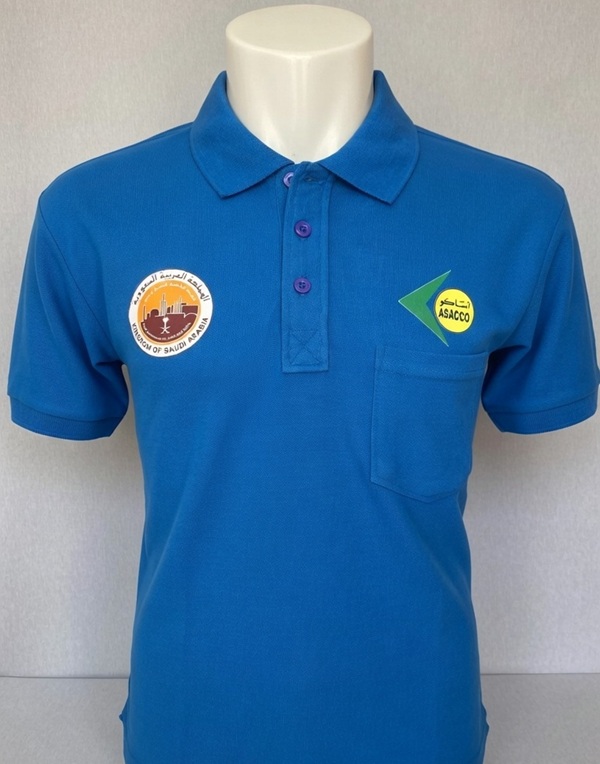
Germany is one of Europe’s largest importers of Indian-manufactured garments. Tirupur’s knitwear exports reach German Mittelstand companies, sports clubs, retail chains, and hospitality groups every month — corporate polo shirts, industrial workwear, football jerseys, and hotel staff uniforms that arrive in Hamburg and Frankfurt warehouses at a fraction of the cost of EU-manufactured equivalents.
Yet for many German businesses placing their first order from India, the import process raises practical questions: What is the customs duty? Do I need OEKO-TEX certification? Which shipping method should I use? What paperwork does German Zoll require?
This guide answers all of those questions in full. Whether you are a German Mittelstand company sourcing industrial workwear, a Bundesliga-affiliated club ordering custom football jerseys, or a hotel group seeking staff uniforms, the import process from India to Germany follows the same straightforward path.
1. Why German Businesses Import Uniforms from India
The cost argument is compelling. A branded embroidered polo shirt manufactured in Tirupur costs €3–6/pc FOB India. The equivalent from a German manufacturer costs €15–30/pc. Even after 12% EU customs duty, 19% German import VAT (recoverable for VAT-registered businesses), and air freight, the landed cost per garment is typically 25–45% lower than German-sourced equivalents on orders of 200 pieces or more.
For industrial workwear — hi-vis jackets, reflective work shirts, cargo trousers — the savings are even more pronounced. A Tirupur-manufactured EN ISO 20471 hi-vis jacket costs €8–14/pc FOB India. German-manufactured equivalents from established Berufsbekleidung brands cost €40–80/pc. For a construction company outfitting 200 workers, the landed cost difference runs into tens of thousands of euros per order cycle.
For custom sports jerseys — sublimation football kits for Kreisliga and Bezirksliga clubs, handball jerseys for German Vereine, cycling jerseys — India offers full-colour sublimation from 100 pieces at prices that simply do not exist from European jersey manufacturers.
Quality has also improved consistently. Tirupur manufacturers supplying EU markets work with OEKO-TEX certified fabrics, EN ISO 20471 hi-vis standards, and multi-stage QC processes precisely because European buyers demand it.
2. EU and German Customs Duty on Imported Uniforms
As a member of the European Union, Germany applies the EU Common Customs Tariff (CCT) to imports from India. There is no bilateral free trade agreement between India and the EU currently in force, though negotiations are ongoing.
Standard EU customs duty on garments from India: 12% of CIF value (Cost + Insurance + Freight) for most knit garments (HS Chapter 61) and woven garments (HS Chapter 62).
German import VAT: 19% on the CIF value plus customs duty. Note: for VAT-registered German businesses (Umsatzsteuer), import VAT is fully recoverable as input tax in your next VAT return. This means the effective cost of the VAT charge is nil for registered businesses — it is a cash flow item, not a real cost.
Common HS codes for uniform categories:
| HS Code | Product | EU Duty |
|---|---|---|
| 6109 | T-shirts, singlets, knitted vests | 12% |
| 6105 | Men’s polo shirts, work shirts (knitted) | 12% |
| 6110 | Sports jerseys, sweatshirts, hoodies | 12% |
| 6211 | Workwear, hi-vis, track suits | 12% |
| 6203 | Men’s trousers, suits, jackets (woven) | 12% |
Correct HS code declaration is important. Misclassification can trigger re-assessment by German Zoll. Your Indian manufacturer should declare the correct HS code on all export documents. If uncertain, a German Zollspediteur (customs forwarding agent) can advise on correct classification before shipment.
3. OEKO-TEX Certification for Germany
German buyers — particularly in school uniforms, children’s sportswear, and retail — frequently require OEKO-TEX Standard 100 certification. This certification tests finished garments for harmful substances including pesticides, heavy metals, formaldehyde, and pH levels, and certifies that the garment is safe for human use.
When ordering uniforms from India for Germany, ask your manufacturer explicitly:
- Do the fabric mills you work with hold OEKO-TEX Standard 100 certification?
- Can you provide the OEKO-TEX certificate number and validity date for the specific fabric used in my order?
- Is the finished garment tested, or just the fabric?
A professional Tirupur manufacturer will be able to answer these questions clearly and provide documentation. Fabric Crew works with OEKO-TEX certified fabric mills and can provide certificates for orders that require them — particularly for school uniforms and children’s sportswear destined for Germany.
GOTS (Global Organic Textile Standard) certification is also available for organic cotton garments — relevant for eco-conscious German brands and retailers.
4. Choosing Your Shipping Method
Air Freight (Recommended for Most Orders)
- Transit time: 7–10 business days from Coimbatore or Chennai to Frankfurt (FRA), Munich (MUC), or Hamburg
- Best for: orders under 200–300 kg, time-sensitive deliveries, first orders where you want to inspect quickly
- Cost: approximately €4.50–7.00/kg on this route (volumetric weight applies for bulky garments)
- Carriers: Lufthansa Cargo, Emirates SkyCargo, Air India (all serve the India–Frankfurt route)
Sea Freight
- Transit time: 18–25 days from Chennai Port to Hamburg Port
- Best for: large orders above 500 pieces or multiple CBM, where per-unit freight saving outweighs the longer lead time
- Cost: substantially lower per unit than air freight at high volumes; an LCL shipment of 2 CBM might cost €300–500 port-to-door
5. Required Documentation for German Customs
- Commercial Invoice — in English and/or German; must state seller/buyer details, HS codes, quantity, unit price, total CIF value, currency, and Incoterms
- Packing List — carton dimensions, weights, and contents; must match the invoice exactly
- Airway Bill or Bill of Lading — primary transport document from the carrier
- Certificate of Origin (GSP Form A) — issued by the Export Inspection Council of India or Indian Chamber of Commerce; enables EU GSP (Generalised System of Preferences) duty preference claims where applicable
- IEC Certificate copy — the Indian exporter’s Import Export Code certificate
- Fabric Composition Declaration — German Zoll requires a material composition declaration (e.g., “100% Polyester”) for garment imports
- OEKO-TEX Certificate — if required by the buyer for the product category
6. Worked Cost Example: 200 Corporate Polo Shirts to Frankfurt
| Cost Element | Amount (€) |
|---|---|
| FOB value (200 pcs × €5.50) | €1,100 |
| Air freight (approx. 30 kg) | €180 |
| Insurance | €8 |
| CIF Value | €1,288 |
| EU customs duty (12% of CIF) | €155 |
| German import VAT 19% (recoverable) | €274 |
| Customs clearance / Zollspediteur | €120 |
| Total Landed (before VAT recovery) | €1,837 |
| Cost per polo (landed, before VAT recovery) | €9.19/pc |
| Cost per polo (landed, after VAT recovery) | €7.82/pc |
Compare this to a branded embroidered polo shirt from a German Berufsbekleidung supplier at €18–28/pc. The Indian-sourced alternative landed at €7.82/pc net represents a saving of €10–20/pc — or €2,000–4,000 on a 200-piece order. At 500 pieces, economies improve further as per-unit freight and fixed charges decrease.
7. How to Find a Reliable Indian Uniform Manufacturer
The due diligence checklist for German buyers mirrors standard international trade practice:
- IEC Certificate — mandatory for any Indian export business. Verify the supplier’s IEC number with India’s DGFT portal if in doubt.
- EU export experience — ask specifically whether they have shipped to Germany or other EU countries. EU customs has specific documentation requirements; an experienced exporter already knows them.
- OEKO-TEX documentation — if required, confirm availability before ordering, not after.
- Physical sample before bulk — non-negotiable. Colour accuracy, fabric weight, and print quality can only be verified on a physical sample.
- References from European buyers — ask for one or two verifiable references from current EU or German clients.
Fabric Crew is a Tirupur-based uniform supplier for Germany with experience shipping to Frankfurt, Hamburg, Munich, Berlin, and other German locations. We provide OEKO-TEX fabric documentation, full EU customs document packages, and physical samples before every bulk order.
Request a quote — share your requirement and we will provide a full price, OEKO-TEX availability confirmation, and Germany delivery timeline within 24 hours.