Sublimation vs Screen Printing for Sports Jerseys: Which Is Better?
When you order custom sports jerseys in bulk, one of the most consequential decisions you will make is the printing method. It affects the look, feel, durability, and cost of every garment. The two dominant methods used in professional jersey manufacturing are sublimation printing and screen printing. Both produce excellent results — in the right context. This guide explains exactly how each process works and helps you decide which is better for your specific requirement.
How Sublimation Printing Works
Sublimation is a dye-based process where digital artwork is printed onto transfer paper using sublimation inks, then heat-pressed onto the fabric. At high temperature (around 200°C), the inks convert directly from solid to gas and bond permanently with the polyester fibres at a molecular level. The result: the design becomes part of the fabric itself, not a layer sitting on top of it.
Because the ink bonds at the fibre level, it cannot crack, peel, or wash off. Sublimation allows for photographic-quality full-colour prints, including gradients, shadows, and intricate patterns, across the entire garment — seam to seam if required.
Sublimation Limitations
- Works only on white or very light-coloured polyester fabrics (100% polyester or high-poly blends)
- Colours appear slightly muted on fabric compared to the digital proof — calibration is essential
- Not suitable for cotton or cotton-rich blends
- Each piece requires its own transfer, so unit cost does not drop as sharply at very high volumes
How Screen Printing Works
Screen printing uses a mesh screen (one per colour) through which ink is forced onto the fabric. Each colour in the design requires a separate screen. The ink sits on top of the fabric and is cured with heat to bond it. It is a proven, high-volume process that produces bold, vivid colours on almost any fabric type.
Screen printing excels when your design has a small number of solid colours — logos, text, numbers — and when you are printing the same design on hundreds or thousands of identical garments.
Screen Printing Limitations
- Each additional colour adds a screen setup cost, making multi-colour designs expensive
- Not suitable for photographic images or fine gradients
- Ink can crack or peel over time, especially on stretch fabrics
- Setup (screen making) costs make small runs relatively expensive per unit
- Printing across seams or over complex panel joins is difficult
Side-by-Side Comparison
| Factor | Sublimation | Screen Printing |
|---|---|---|
| Colour range | Unlimited, full CMYK | Best with 1–6 spot colours |
| Fabric compatibility | Light polyester only | Cotton, poly, blends |
| Durability | Permanent — will not peel or crack | Can crack/fade over time |
| Design complexity | Unlimited detail, gradients, photos | Flat solid colours work best |
| Setup cost | Low — digital file only | Higher — screens per colour |
| Unit cost (100 pcs) | Moderate | Higher (amortising setup) |
| Unit cost (1,000+ pcs) | Moderate | Lower (setup amortised) |
| Full-garment print | Yes, seam to seam | Limited placement areas |
| Minimum order | As low as 100 pcs | Typically 100+ pcs per design |
Which Should You Choose for Sports Jerseys?
Choose Sublimation If:
- Your jersey design has multiple colours, gradients, or photographic elements
- You want all-over printing (sleeves, back, front, collar area)
- You are ordering 50–500 pieces and do not want high screen setup fees
- Performance and durability matter — jerseys will be washed frequently
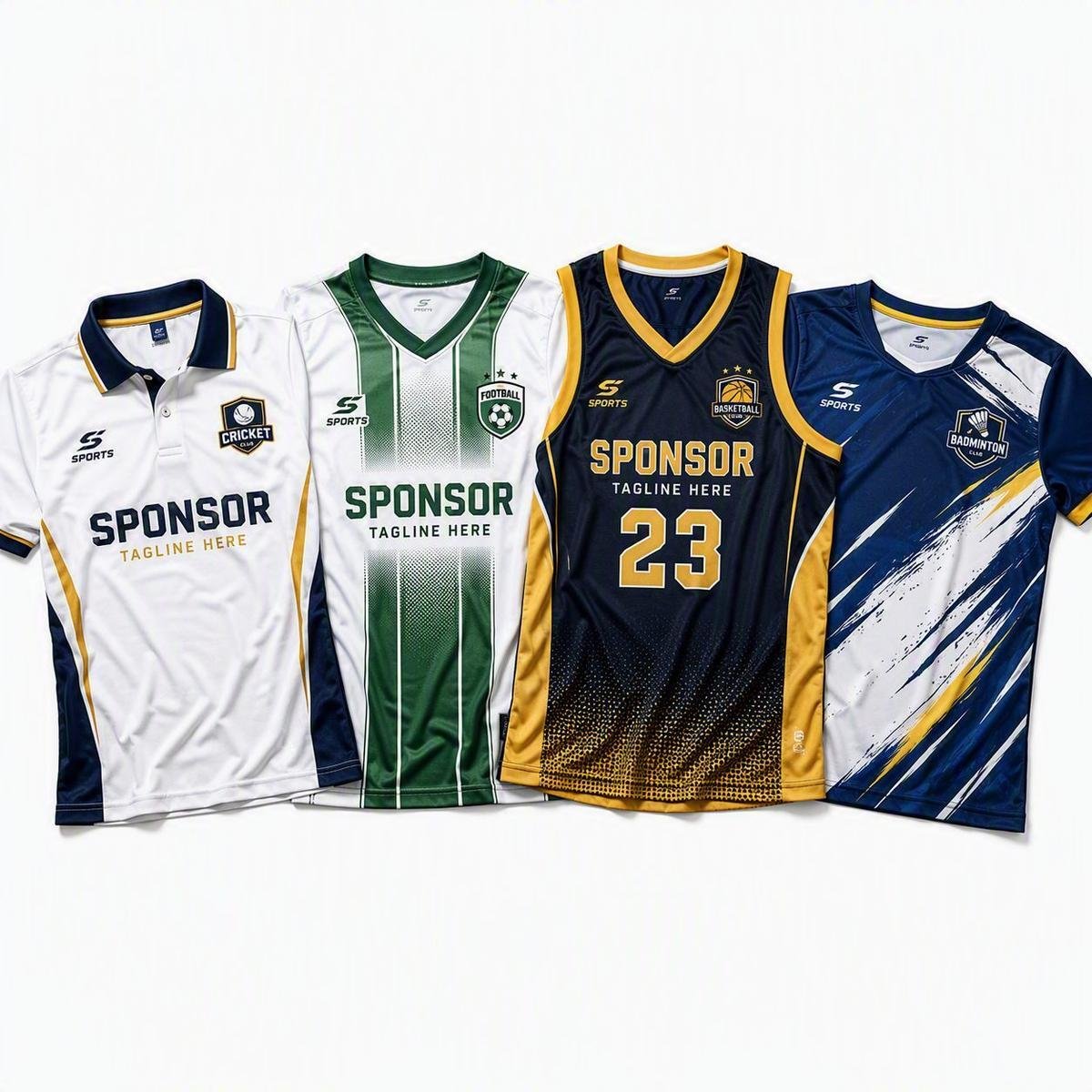
- You are ordering cricket jerseys, football kits, or basketball uniforms with individual player names and numbers
Choose Screen Printing If:
- Your design is a simple 1–3 colour logo or text on a solid fabric base
- You are printing on cotton or cotton-blend garments (e.g., promotional event tees)
- Your order volume exceeds 1,000 pieces with an identical design
- You need a specific ink finish such as puff print, metallic, or high-density
Cost Breakdown: Real Numbers
For a typical football jersey order at 200 pieces with a 5-colour all-over design:
- Sublimation: No screen setup costs. Design digitised once. Per-unit print cost is consistent. Total cost per jersey (fabric + print + cut-and-sew) typically falls in the range of $4.50–$8.00 FOB depending on fabric and complexity.
- Screen printing (5 colours): Setup cost of $50–$80 per screen x 5 screens = $250–$400 in screens alone. Per-unit cost may be lower at 200 pieces but total cost including setup is comparable or higher. At 1,000 pieces, screen printing offers a clear per-unit cost advantage for simple designs.
At Fabric Crew, the majority of our sports jersey production uses sublimation because most team kit requirements involve complex, multi-colour designs with individual name and number personalisation. For promotional tees and simple logo placements, screen printing remains a strong option. Get in touch and we will recommend the right process for your order.